Best Outschool Alternatives for Self-Paced Learning (2026)
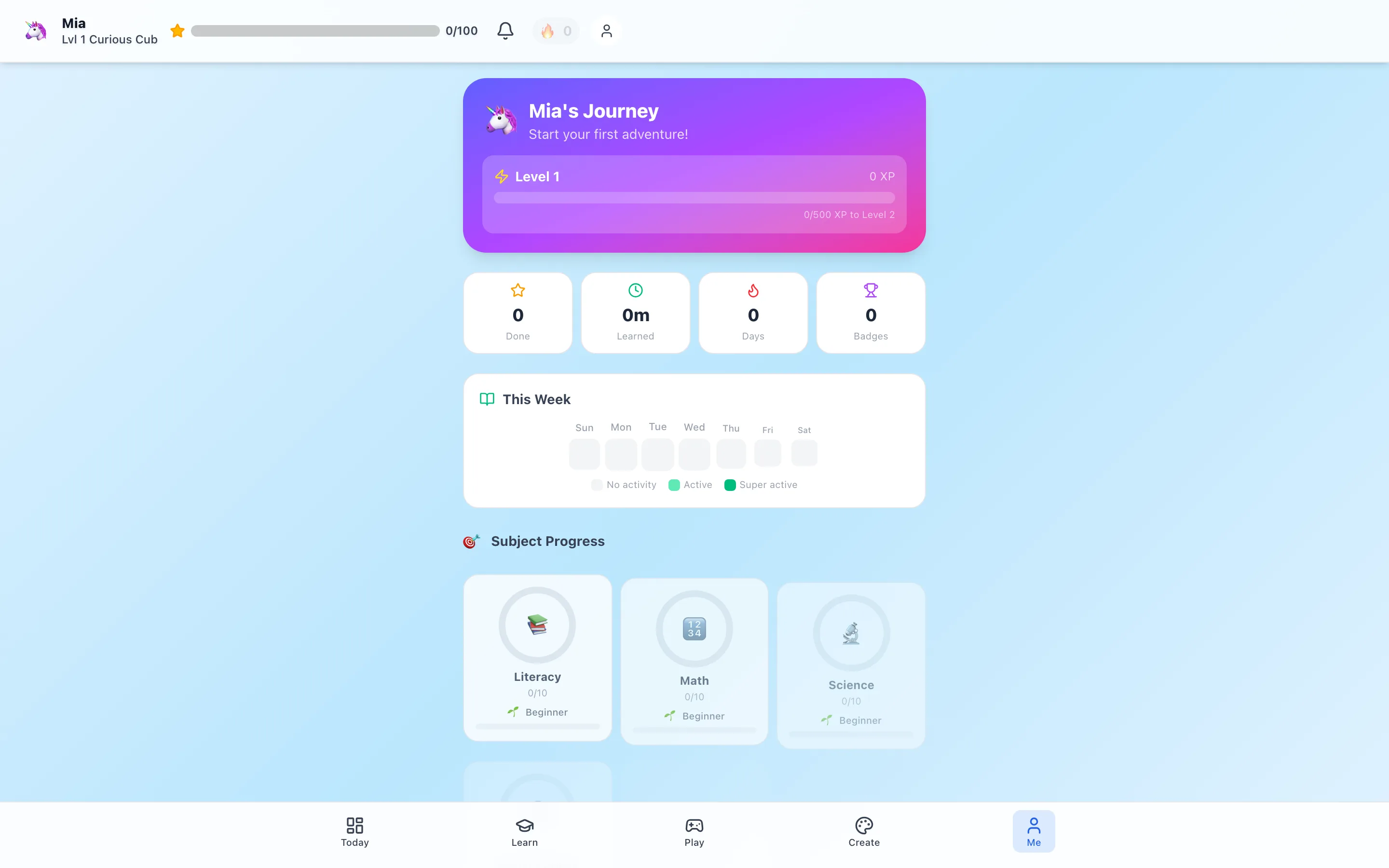
Trial offer update — September 17, 2026: HomeSchool.You's Summer Welcome Special offered a 7-day free trial with no credit card required, valid through September 15, 2026. That special is no longer active. New standard signups now receive a 3-day free trial with a credit card required upfront. The selected plan bills automatically when the trial ends unless canceled beforehand. Existing users keep their already-promised trial terms. See current plans and trial terms.
Disclosure: HomeSchool.You publishes this list and appears on it. We've been explicit about what Outschool does that none of us can replicate.
Outschool is a marketplace of live classes for ages 3–18, priced per class — roughly $10–$25 for a one-time class, $12–$30 per session for multi-week courses, and $30–$60+ for 1-on-1 tutoring. Families look for alternatives when the monthly total gets unpredictable or the calendar becomes a burden.
What you're giving up
Before the list: Outschool's core value is a live human teaching your child alongside other children. Nothing below replaces that. If your child is using Outschool for social contact, or because they need someone to notice they're stuck, switching to self-paced software is a real downgrade on that specific axis. Every option here trades live instruction for predictable cost and zero scheduling.
Quick comparison
| Alternative | Price | Ages | Best for |
|---|---|---|---|
| HomeSchool.You | $20/mo, up to 4 children | 3–10 | Flat-rate everyday base |
| Khan Academy Kids | Free | 2–8 | Zero budget |
| Power Homeschool | $99/mo per student | PreK–12 | Video instruction, high school |
| Time4Learning | $39.95/mo per student | PreK–12 | Structured lessons, records |
| IXL | ~$9.95–$19.95/mo | PreK–12 | Skill gaps and test prep |
| Miacademy | $48/mo per child | K–8 | A graded curriculum spine |
Prices verified against published company pages, August 2026.
1. HomeSchool.You — best flat-rate everyday base
$20/month for up to four children ages 3–10: 57 courses, 84 games, 575 hands-on activities, 10 languages, 541 park virtual field trips, art and music studios.
Where it wins: the bill doesn't move no matter how much your children use it, and there's nothing to schedule. For families whose Outschool spend crept past $150/month, that's the fix.
Where it doesn't: no live teachers, no classmates, and we stop at age 10. If peer contact is why you're on Outschool, don't switch — supplement. Full comparison.
2. Khan Academy Kids — best free option
Free, no ads, nonprofit, ages 2–8.
Where it wins: eliminates cost entirely, with strong early literacy and math.
Where it doesn't: narrow subjects, ends at 8, no live element. Full comparison.
3. Power Homeschool — closest to being taught
$99/month per student, PreK–12, recorded video lessons with an instructor plus automatic grading.
Where it wins: of everything here, this is nearest to Outschool's experience — a teacher explaining the concept — minus the live interaction and the calendar. It also covers high school, where most alternatives stop.
Where it doesn't: expensive per student, no free trial, non-refundable. Recorded video can't answer a question. Full comparison.
4. Time4Learning — best structured replacement
$39.95/month per student, PreK–12, with animated lessons, quizzes, and automated attendance and grade records.
Where it wins: a defined scope and sequence covering the whole span Outschool does, with reporting many states want.
Where it doesn't: per-student pricing, and the lesson-quiz rhythm bores some kids. Full comparison.
5. IXL — best for targeted gaps
From about $9.95/month for one subject and child; roughly $4/month per additional child.
Where it wins: if you were booking Outschool tutoring to fix a specific math or reading gap, IXL does that job for a fraction of $30–$60 per session.
Where it doesn't: practice, not teaching, and the drill format wears on some children. Full comparison.
6. Miacademy — best graded spine
$48/month per child for K–8 or $516/year at the published regular price. Lifetime plans are $1,168 for one child or $2,598 for up to four; MiaPrep continues through grades 7–12 under a separate offer.
Where it wins: a complete graded curriculum with progress reports — a defined program rather than an assembled set of classes.
Where it doesn't: per-child pricing gets expensive with siblings. Full comparison.
The setup most families actually land on
Rather than replacing Outschool, most families who solve this problem keep a small amount of it. A flat-rate self-paced platform handles the daily grind — reading, math, science, the routine work — and Outschool gets used for the two things it's genuinely irreplaceable at: peer interaction, and the one subject your child is obsessed with that no curriculum covers.
That usually means one or two Outschool classes a month instead of eight, which fixes the budget without giving up the live element.
How to pick
- Costs are the problem → HomeSchool.You or Khan Academy Kids as the base, keep 1–2 classes
- Scheduling is the problem → any self-paced option here
- You have a high schooler → Power Homeschool
- You were paying for tutoring → IXL
- You want a graded curriculum → Miacademy or Time4Learning
- Your child needs peers → don't fully leave
Our 3-day trial requires a credit card upfront if you want to test the base-plus-classes setup.
Methodology
Outschool prices reflect typical listing ranges as of August 2026 — teachers set their own rates, so your real cost depends on bookings. All other prices come from published company pages the same month. We led with what you lose by leaving, because a list that pretends software replaces a teacher isn't useful.
Frequently asked questions
Why do families leave Outschool?
Two reasons dominate — unpredictable costs that scale with every class booked, and the scheduling burden of classes that happen at fixed times in a teacher's time zone.
What do you lose by switching from Outschool?
Live teaching and peer interaction. No self-paced platform replaces a real teacher who can see your child is confused, or classmates to talk to. That's a real trade, not a marketing caveat.
What's the most predictable-cost alternative?
HomeSchool.You at a flat $20/month for up to 4 children, or Khan Academy Kids free. We publish this list, so weigh that.
Is there a self-paced option covering high school?
Power Homeschool at $99/month per student covers PreK–12 with recorded video instruction, which is the closest to a taught class without live scheduling.
Can I keep Outschool for just a few classes?
Yes, and many families do exactly that — a self-paced base for daily work plus occasional Outschool classes for social contact or a specialist subject.
Which alternative handles niche interests best?
None of them, honestly. Outschool's marketplace is unmatched for unusual subjects. If that's why you use it, no alternative here substitutes.