Homeschool Financial Literacy for Ages 5–10: A Four-Week Plan
Money lessons can begin at the kitchen table. Your child does not need a bank account, a shopping trip, or a lecture about the family budget. A pretend shop, a few paper tokens, and a thoughtful question are enough to get started.
This four-week homeschool financial-literacy plan is designed for ages 5–10, with easier and more challenging versions of the same activities. It also works as supplementary learning after school. The goal is to practice everyday choices together, not to turn children into miniature financial managers.
The Consumer Financial Protection Bureau's Money as You Grow resources offer families age-based activities and conversation starters. The plan below is our own practical example, not a CFPB curriculum or endorsement.
What you need
Gather scrap paper, crayons, a few household items, and an envelope for saving tokens. Make large paper tokens instead of using small coins around younger siblings. Nothing needs to be purchased.
Choose one or two short sessions each week, stopping while the activity is still useful. Repeat a week if your child wants more practice. These are flexible activity blocks, not prescribed screen-time limits or milestones every child must meet on schedule.
| Week | Main idea | Hands-on activity | Something to notice |
|---|---|---|---|
| 1 | Needs, wants, and choices | Sort picture cards | Can your child explain a choice? |
| 2 | Prices and spending | Run a pretend shop | Can they choose within a token budget? |
| 3 | Saving toward a goal | Make a saving tracker | Can they show how much is still needed? |
| 4 | Planning and tradeoffs | Plan a pretend family outing | Can they explain what the plan includes and leaves out? |
Week 1: needs and wants, without judging what people own
Draw six cards together: drinking water, a meal, a warm coat, a toy, a storybook, and a party decoration. Invite your child to group them and explain their thinking.
Some answers depend on the situation. A coat may be essential in cold weather. A book can be borrowed instead of bought. Something enjoyable can matter to family life even when it is not an immediate necessity.
Try asking, “What would we need first on a cold day?” or “Could we enjoy this without buying it?” Avoid labeling other families' purchases or asking children to worry about household bills. Adults remain responsible for those decisions.
For a child starting out: use three picture cards and let them point or tell you a story.
For a child ready for more: add a situation, such as packing for a picnic, and ask them to revise their choices.
Optional screen connection: preview a related lesson or our Wants vs. Needs Sort activity, then put the screen away and use your own cards.
Week 2: open a pretend shop
Place three familiar objects on a table. Give them prices of 2, 3, and 5 tokens. Give the shopper 6 tokens and let them choose.
A child could buy the 2-token and 3-token items and keep 1 token. They could buy the 5-token item and keep 1. Buying all three would require 10 tokens, which is more than the available 6.
Take turns as shopper and shopkeeper. Ask, “How can we check the total?” and “What else could you choose?” If counting is difficult, move one token at a time beside each price tag.
For a child starting out: price everything at 1 or 2 tokens and count together.
For a child ready for more: ask them to write a receipt, calculate change, or find two different purchases with the same total.
These tokens are a counting tool. They do not teach the different values of real coins. Add local currency later when your child is ready, using an adult-supervised activity appropriate to your family.
For another version, see Store Play. No real purchase is needed.
Week 3: save toward a small goal
Draw a pretend item that costs 12 tokens. Begin with 3 saved tokens and add 3 each round. After three more rounds, the envelope holds 12: 3 + 3 + 3 + 3.
A round can be another turn in the game; it does not have to represent a day, a chore, or a payment. Your family can keep its own approach to allowance and household responsibilities.
Use this simple tracker on paper:
| Round | Starting tokens | Tokens added | New total | Still needed for 12 |
|---|---|---|---|---|
| 1 | 3 | 3 | 6 | 6 |
| 2 | 6 | 3 | 9 | 3 |
| 3 | 9 | 3 | 12 | 0 |
For a child starting out: use a goal of 4 tokens and color one large circle per token.
For a child ready for more: compare adding 2 tokens each round with adding 3. Ask what happens if the goal changes. Changing a plan is something to discuss, not a failure.
Our Saving Jar Goals activity offers another way to explore the idea. Keep the emphasis on making a plan and noticing progress.
Week 4: plan a pretend family outing
Give your child a fictional budget of 10 tokens. Offer these imaginary choices:
- A park visit: 0 tokens
- A craft session: 4 tokens
- Picnic ingredients: 3 tokens
- A special snack: 2 tokens
- Tokens kept for another day: whatever remains
Explain that these are invented game prices, not real local costs. Ask your child to create a plan and check the total. A craft session, picnic, and snack would use 9 tokens, leaving 1. A park picnic would use 3, leaving 7.
There is more than one reasonable answer. Ask, “What matters most in your plan?” and “What are we choosing to leave for another time?” If siblings disagree, let each explain a plan before choosing a shared version.
For a child starting out: offer two possible plans and count their costs together.
For a child ready for more: change one pretend price and ask them to adjust the plan without going over 10.
Make screen time a bridge to real understanding
A digital activity can introduce an idea or provide practice. Give it a clear purpose: “Today we are thinking about saving toward a goal.” Afterward, return to the envelope, shop, or drawing and ask your child to show the idea in their own way.
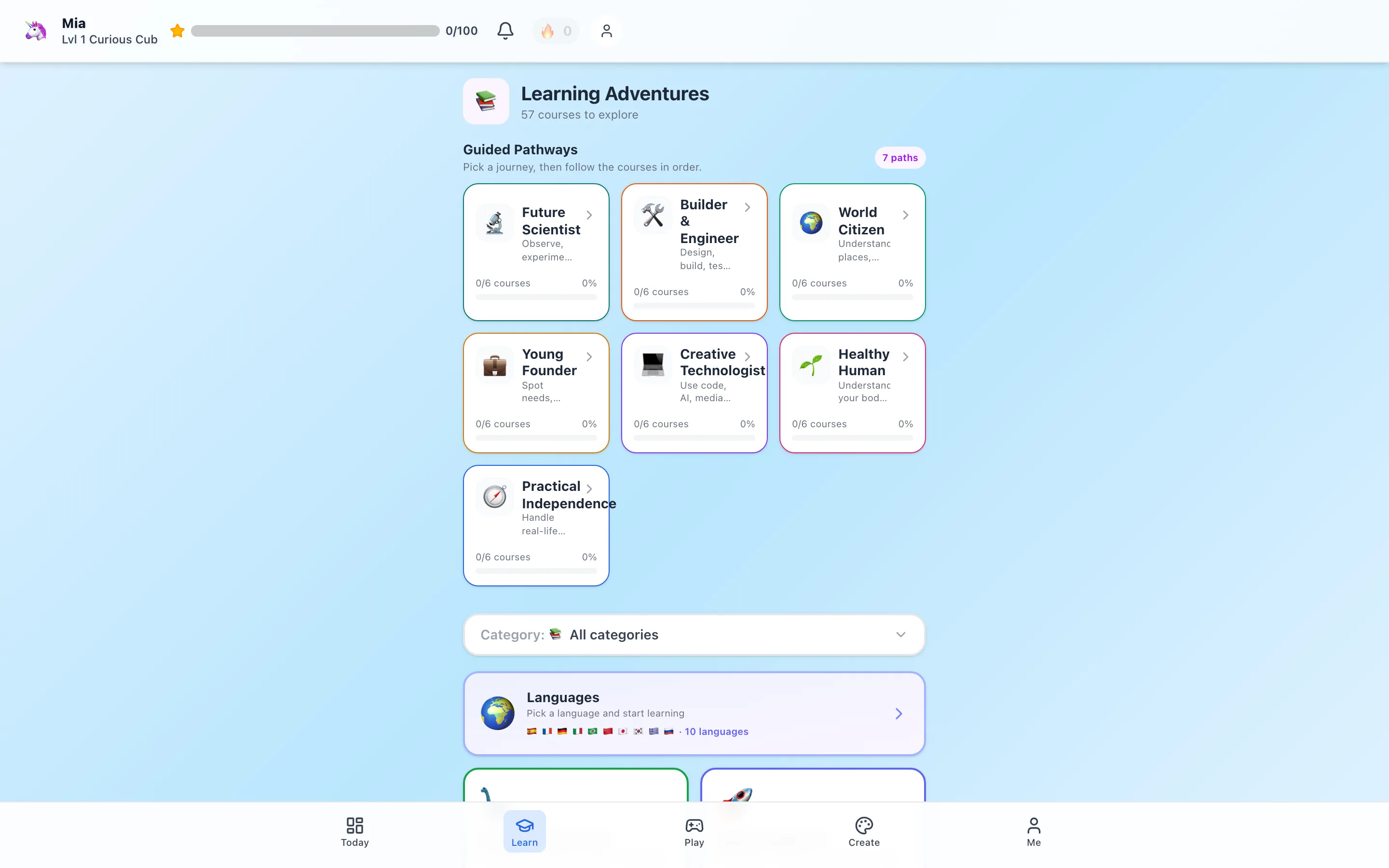
HomeSchool.You includes a Money & Financial Literacy course and a Finance Quiz. Preview the questions and choose material your child is ready for; the wider course includes topics beyond this introductory plan. A quiz result is one piece of feedback, not proof that a child is ready to handle money independently.
You can also do every activity here without an app. A useful follow-up might simply be, “Tell me how you decided.”
Keep a small record of what your child can explain
Save one drawing, pretend receipt, or tracker each week. Add a sentence such as “Explained two ways to spend 6 tokens” or “Needed help subtracting the amount still needed.” These notes help you choose what to revisit without ranking siblings against one another.
For a broader routine, explore our screen-free math and science activities and guide to homeschool progress records.
HomeSchool.You supports ages 3–10 with digital learning and hands-on activities for supplementary use or a parent-led homeschool curriculum. You can browse sample lessons or review the family plan and no-card trial if you want that support alongside your own activities.
Sources and scope
Reviewed September 16, 2026. The CFPB resource linked above supplies broader family money-learning guidance. The four-week sequence, pretend prices, and token examples are original teaching suggestions from HomeSchool.You. Product links point to our public activity and game descriptions. This is introductory education, not a complete course or a promise of financial outcomes.
Frequently asked questions
How do I start teaching financial literacy at home?
Begin with familiar choices: what something costs, what you can choose with a small pretend budget, and what saving toward a goal means. Use drawings, play money, and conversation before introducing more complicated ideas.
Does my child need an allowance for these activities?
No. The plan works with paper tokens and pretend purchases. You can teach planning and tradeoffs without spending real money or changing your family's approach to chores and allowance.
Can children of different ages do this together?
Yes. Use the same pretend shop or saving goal, then change the task. A younger child can count tokens or draw a choice; an older child can calculate totals, compare plans, and explain what they would give up.
Is this a complete financial literacy curriculum?
No. It is an introductory four-week activity plan focused on needs and wants, prices, saving, and simple spending choices. Repeat or adapt it within your wider homeschool curriculum.
How should we use learning games in this plan?
Choose a game or lesson that matches the week's idea, preview it, and follow it with an offline example. The screen activity is optional; every week can be completed without it.