Best Homeschool Apps for Kids Who Hate Worksheets (2026)
Trial offer update — September 17, 2026: HomeSchool.You's Summer Welcome Special offered a 7-day free trial with no credit card required, valid through September 15, 2026. That special is no longer active. New standard signups now receive a 3-day free trial with a credit card required upfront. The selected plan bills automatically when the trial ends unless canceled beforehand. Existing users keep their already-promised trial terms. See current plans and trial terms.
Disclosure: we build HomeSchool.You, which appears below. We've also spent the first section arguing that an app might not be your answer, which is the honest place to start.
First: figure out why
"Hates worksheets" describes a behaviour, not a cause, and the right response differs completely depending on which cause you're dealing with.
It's too hard. A worksheet exposes what a child can't do, in writing, permanently. Avoidance is a rational response to that. The tell is that resistance is worst in one specific subject. → You need diagnosis, not motivation. IXL's diagnostic or a tutor will find the gap. A game will make them happier while the gap stays.
It's too easy. Repetition of something already mastered is genuinely tedious, and a bright child is right to object. The tell is that they're fast and accurate when they do comply, then resist the next page. → You need harder material, not more engaging material. Beast Academy, or a subject they choose.
It's the format. They understand it fine and could do it, but sitting still filling in boxes is intolerable. The tell is that they'll happily do the same skill verbally, or in a game, or while moving. → This is the one apps genuinely solve.
It's a control issue. School is the one thing they can refuse. The tell is that resistance is broad and rises when you push. → Choice helps more than software. Let them pick the order, the subject, or the format.
Most of the list below addresses the third cause. That's a real and common problem — just be reasonably confident it's yours before spending money.
Comparison
| Platform | Price | Ages | Approach |
|---|---|---|---|
| Prodigy | Free core; ~$5–$20/mo | ~5–14 | Math as RPG battles |
| HomeSchool.You | $20/mo, up to 4 children | 3–10 | Games + 575 off-screen activities |
| Adventure Academy | $12.99/mo or $45/yr | 8–13 | Multiplayer world |
| Beast Academy | $15/mo or $96/yr | 6–13 | Hard problems as comics |
| Outschool | Pay per class | 3–18 | Live classes on chosen interests |
| Epic! | $9.99/mo or $79.99/yr | Under 12 | 40,000 books, child-chosen |
| Khan Academy Kids | Free | 2–8 | Guided play, no pressure |
Prices verified against published company pages, August 2026.
1. Prodigy — start here, it's free
Core math and English free; memberships roughly $5–$20/month. Math covers PreK–8.
The single best test of whether format is your problem: it costs nothing. If your child who refuses a math worksheet will happily do ninety math problems to win a battle, you've learned something important — and you haven't spent anything. Full comparison.
2. HomeSchool.You — best for getting off the screen entirely
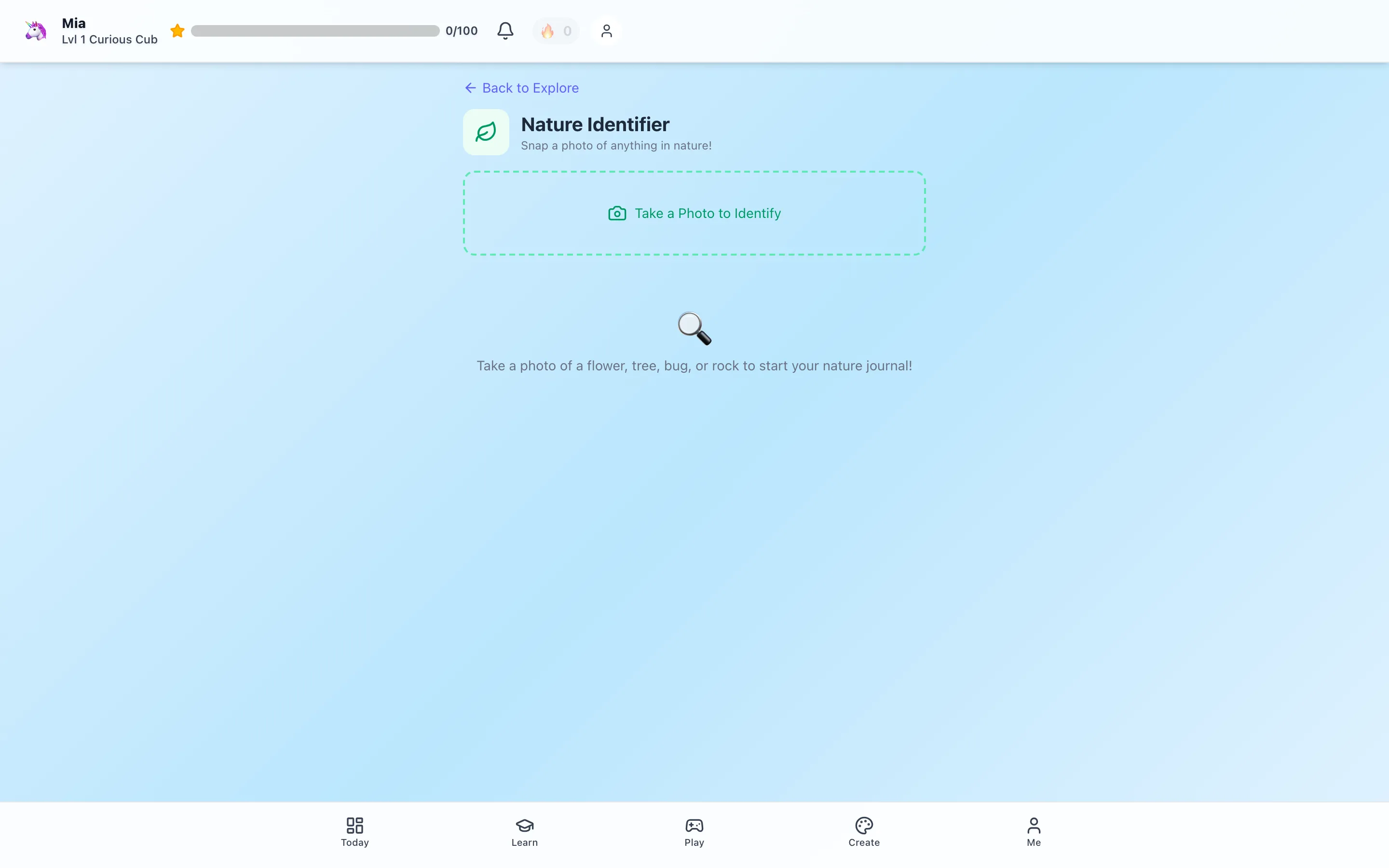
$20/month for up to four children ages 3–10. 84 games including 3D science labs, plus 575 hands-on activities — cooking, nature identification, engineering builds, scavenger hunts — that are deliberately not on a device.
For a child who won't sit still, the useful part usually isn't our games; it's the activities that involve standing up. Arcade games are also time-gated against a parent-set daily budget, so a child who's motivated by game time earns it through the rest.
Worth naming the trade many parents are actually making here: if the alternative to a worksheet battle is your child on YouTube while you recover, an app that turns that same half hour into problem-solving is a straightforward win. The bar isn't perfection — it's beating the realistic alternative. Our learning games page explains the structure.
Honest limit: if the resistance is a comprehension gap, we'll make school more pleasant without fixing it. Diagnose first.
3. Adventure Academy — best for a child who lives in games
$12.99/month or $45/year, ages 8–13. An MMO world covering four core subjects.
For a child already deep in Roblox or Minecraft, the familiar format lowers resistance substantially. Note that it's a shared online space with other children. Full comparison.
4. Beast Academy — best for the bored ones
$15/month or $96/year, ages 6–13, from Art of Problem Solving. Genuinely hard math presented as comics.
If your child resists because the work insults their intelligence, this is the correct answer and a game won't be. It's demanding — wrong choice for a child who's struggling.
5. Outschool — best for following an obsession
Pay per class, $10–$25 typical, ages 3–18.
The underrated option for a resistant child: let them take a class on the thing they actually care about, taught by someone enthusiastic about it. A child who won't do a reading worksheet may write willingly for a class about dragons or Minecraft engineering. Motivation transfers more than people expect. Full comparison.
6. Epic! — best for reluctant readers
$9.99/month or $79.99/year, 40,000+ books and audiobooks, under 12.
Reading resistance is often a choice problem rather than a skill problem. Given 40,000 options including graphic novels and audiobooks, many children who "hate reading" find something. Audiobooks count — comprehension is comprehension.
7. Khan Academy Kids — best low-pressure option
Free, ad-free, nonprofit, ages 2–8.
For a young child who's become anxious about being wrong, the absence of scores, streaks, and reward economies matters. Nothing here is trying to make them come back. Full comparison.
Things that help regardless of platform
- Shorten the sessions. Fifteen focused minutes beats an hour of negotiation. Elementary work genuinely doesn't need to fill a school day.
- Give real choices. Order, subject, or format. The choice itself does most of the work.
- Separate skill practice from thinking. Ten math facts on paper is fine; ninety is where resentment starts.
- Let them be the teacher. Explaining something back is both good pedagogy and a status reversal that many resistant children love.
- Keep some writing. Handwriting and spelling patterns do benefit from written practice. The aim is less and better targeted, not zero.
Our 3-day trial requires a credit card upfront, and bills automatically afterward unless canceled. Prodigy also has a free core, so you can compare the formats.
Methodology
Prices come from each company's published pages in August 2026. We opened by arguing that the cause matters more than the product, and pointed to a free option first — because if format is the problem, you shouldn't have to pay to find out.
Frequently asked questions
Why does my child hate worksheets?
Usually one of three reasons — the work is too hard and worksheets expose that, it's too easy and repetitive, or the format itself is the problem. The fix differs completely depending on which one it is.
What's the best app for a child who refuses math?
Prodigy. Its RPG format gets children doing hundreds of problems voluntarily, and the core is free, so it costs nothing to test whether format was the issue.
Are game-based apps just avoiding the problem?
Not if the child is learning. Willingness to practice is a legitimate constraint. But if a child avoids work because they don't understand it, a game postpones the real fix.
What helps a child who won't sit still?
Off-screen, movement-based activities. HomeSchool.You includes 575 hands-on activities, many involving cooking, building, or going outside.
What about a child who's bored because it's too easy?
Beast Academy for math, or Outschool classes on a subject they're genuinely interested in. More of the same work at the same level makes boredom worse.
Should I just stop using worksheets entirely?
Not necessarily. Some skills — handwriting, spelling patterns, math fact fluency — genuinely benefit from written repetition. The goal is usually less of it, better targeted, not none.