15 Reading and Phonics Games Inside HomeSchool.You—and the Skill Each Practices
“Reading games” is too broad to be useful. A game that asks a child to find a hidden word does not teach the same thing as one that blends speech sounds or asks for evidence from a passage.
HomeSchool.You currently has 16 games in its Words category. This guide maps the 15 designed mainly for individual practice. The sixteenth, Story Together, is a collaborative sibling storytelling activity and works differently enough to deserve the separate note at the end.
The 15-game skill map
| Game | What the child does | Primary practice role |
|---|---|---|
| Phoneme Blender | Pulls sounds apart and joins them to read words | Phonemic segmentation and blending |
| Picture Match | Uses letter choices to spell a pictured word | Picture vocabulary, sound-letter connection, early spelling |
| Sight Word Builder | Sees a word, then types it from memory | Orthographic memory and quick word recognition |
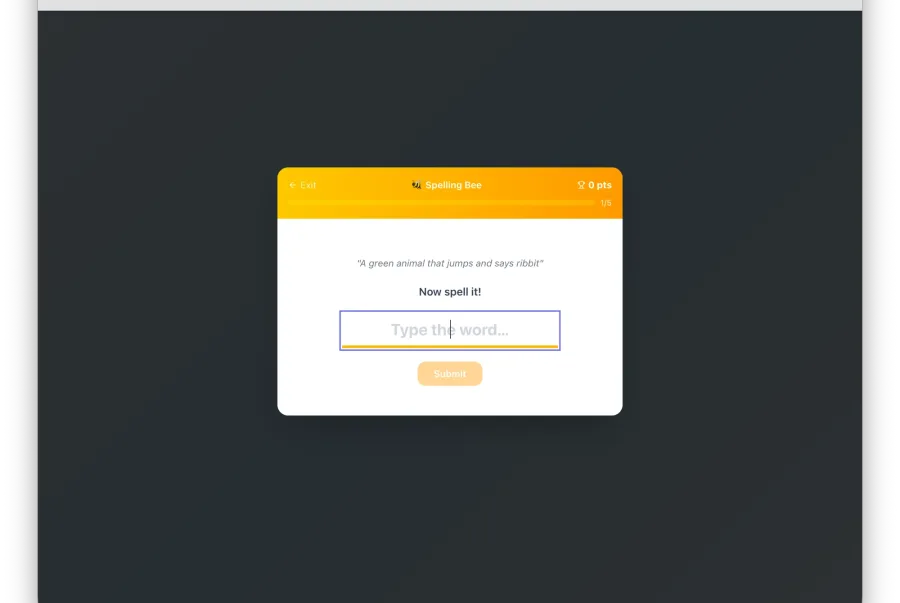
| Spelling Bee | Studies a word and spells it after the model disappears | Spelling recall and visual word memory |
| Word Constructor | Reads a clue and spells the answer without letter hints | Vocabulary retrieval and independent spelling |
| Word Jumble | Rearranges scrambled letters into a word | Letter-pattern recognition and flexible decoding |
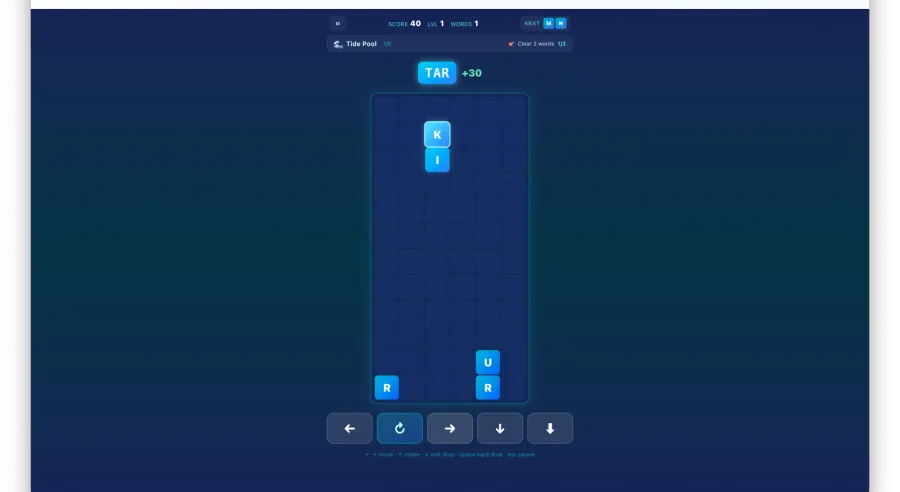
| Word Drop | Combines falling letter pairs to make words | Word building under a light planning constraint |
| Word Chains | Changes one word into another one letter at a time | Phoneme/grapheme manipulation and spelling patterns |
| Word Wizard | Guesses a hidden word in a limited number of tries | Vocabulary, spelling patterns, and strategic elimination |
| Word Search | Finds target words in a letter grid | Visual scanning and stable spelling-pattern recognition |
| Sentence Puzzle | Orders word tiles into a complete sentence | Syntax, sentence structure, and meaning |
| Reading Quiz | Reads a short story and answers questions | Basic comprehension and recall |
| Reading Coach | Reads a passage, finds evidence, and selects an answer | Evidence-based comprehension |
| Synonym Sprint | Chooses synonyms or antonyms in several modes | Vocabulary depth and word relationships |
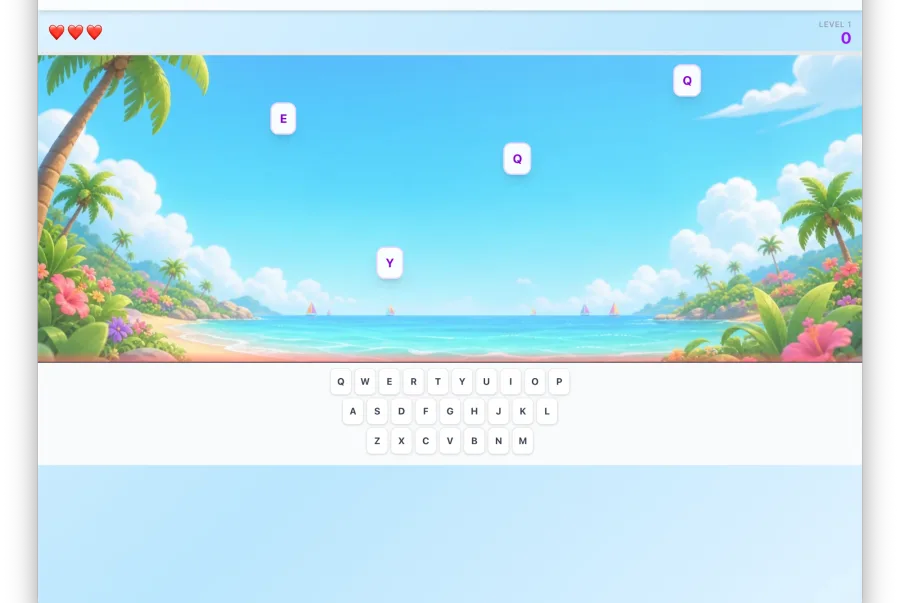
| Typing Challenge | Catches falling letters with the keyboard | Letter-location fluency and typing—not reading instruction by itself |
1. Sound work before fluent reading
Phoneme Blender
This is the clearest phonological game in the set. The child pulls spoken-word sounds apart and pushes them back together. That targets the awareness that a word is made of smaller sounds—a prerequisite for decoding.
It is practice, not a full systematic phonics sequence. A child who is persistently struggling needs explicit teaching and may need specialist assessment, not simply more rounds.
Picture Match
The picture supplies meaning before the child builds the word. That reduces the comprehension burden and lets attention move to the letters and sounds. It is a better starting point for many pre-readers than a definition-only spelling game.
2. Building words and storing spelling patterns
Sight Word Builder and Spelling Bee
Both briefly show a model and ask the child to reproduce it. The useful skill is orthographic mapping—connecting the spoken word, its sounds, and its stable letter sequence—not merely memorizing a visual shape.
Word Constructor
The clue supplies meaning, but the child must retrieve and spell the word without a letter bank. This is harder than copying. It is a better fit after the child can read the clue independently.
Word Jumble, Word Drop, and Word Chains
These three all manipulate letters, but the thinking differs:
- Word Jumble starts with all letters present and asks for reordering.
- Word Drop adds planning as letter pairs accumulate.
- Word Chains makes the smallest possible change repeatedly, highlighting how one letter can change sound and meaning.
3. Vocabulary and word relationships
Word Wizard
Limited guesses push the child to use word length, known letters, spelling patterns, and vocabulary together. A child can still guess randomly, so the best follow-up is: “Why did you choose that word?”
Synonym Sprint
Synonyms and antonyms deepen vocabulary beyond knowing one definition. The game includes classic choice, timed sprint, synonym-or-antonym decisions, and context replacement. Context is the most instructionally interesting mode because meaning can change by sentence.
Word Search
Word searches can reinforce the visual sequence of letters and scanning persistence, but they are weaker for comprehension. We include the game and label its role narrowly rather than presenting it as a reading lesson.
4. Sentences and comprehension
Sentence Puzzle
Reordering tiles makes syntax visible. The child must decide what sounds complete and what produces meaning. Ask the child to read the finished sentence aloud and change one word while keeping the grammar correct.
Reading Quiz
This is the straightforward passage-and-questions format. It can show whether the child remembers explicit information. It should not be the only comprehension work.
Reading Coach
Reading Coach makes the evidence step explicit: read, locate support, then answer. That helps separate “I remember something” from “the passage supports this choice.”
5. Typing is adjacent to literacy, not the same thing
Typing Challenge builds keyboard-letter location and response fluency. Those skills help a child express writing digitally, but fast typing does not prove phonics or comprehension. We keep it in the word-game collection because letters are the content, while stating the narrower benefit.
The sixteenth game: Story Together
Story Together asks siblings to take turns building a narrative. It practices oral language, sequence, perspective, and collaboration more than individual decoding. That is why it is not in the numbered list—even though its output may be more meaningful than a score.
A simple progression by need
- Pre-reader: Phoneme Blender → Picture Match
- Beginning decoder: Sight Word Builder → Spelling Bee → Word Chains
- Building sentence control: Sentence Puzzle → Reading Quiz
- Ready for deeper comprehension: Reading Coach → Synonym Sprint
- Needs keyboard fluency: Typing Challenge in a short separate block
Age is less informative than the child’s actual skill. Preview the game and stop if motor speed or reading load is masking the thing you meant to practice.
How to use a game without letting it become the whole lesson
Try a 15-minute loop:
- Read or teach one small idea.
- Play one targeted game for 5–7 minutes.
- Ask the child to read, spell, or explain one example away from the game.
- Stop at the natural endpoint.
For sequenced instruction, see the Literacy Fundamentals syllabus and Hearing the Sounds in Words sample. The complete 84-game catalog distinguishes academic practice from parent-timed arcade play.
Frequently asked questions
How many word and reading games are in HomeSchool.You?
The current Words category has 16 launch games. This guide maps 15 individual-practice games; the sixteenth, Story Together, is a collaborative sibling storytelling activity.
Do the games replace a reading curriculum?
No. They practice specific skills and sit beside literacy lessons, read-alouds, decodable text, writing, and conversation. A game score alone does not prove reading mastery.
Which game is best for a child who is not reading yet?
Picture Match and Phoneme Blender have the clearest pre-reading roles, while Sight Word Builder and Sentence Puzzle assume more print familiarity. Parents should preview motor and reading demands.
Are reading games counted as arcade time?
No. The Words category is separate from parent-timed arcade play.